How to Fight a Fire Hydrant Ticket in NYC
You were sure there was room. The hydrant was up the block, your bumper past it — or so it looked from the driver's seat. Then the orange envelope: code 40, $115, for parking within 15 feet of a fire hydrant. Hydrant tickets feel unwinnable because the rule sounds absolute, but they turn on measurements and visibility, and both can be checked. This guide walks through how to fight a fire hydrant ticket NYC drivers get daily — the 15-foot rule, what to photograph before you move the car, and how to check your odds free before you pay.
The 15-foot rule, as the city writes it
Code 40 means the vehicle was parked within 15 feet of a fire hydrant. As the code 40 page lays it out, the rule is stricter than most drivers expect:
- 15 feet on both sides of the hydrant, measured along the curb.
- Day and night. No overnight exception, no quiet-hours exception.
- Marked or not. The rule applies whether or not the hydrant is painted or easy to spot.
- Sitting in the car does not save you — unless a licensed driver stays behind the wheel, ready to move it. An empty car with hazards on is still parked.
The fine is $115 everywhere in NYC. Parking violations are handled by the Department of Finance, not the DMV, so the ticket carries no license points. The money is the exposure, and it grows on a schedule.
The penalty clock on a $115 ticket
Leave a code 40 ticket alone and the city adds penalties on top of the fine:
- Day 30: +$10. Day 60: +$20 more. Day 90: +$30 more — $60 in penalties stacked on the $115 fine, $175 total.
- Around day 100: the unpaid ticket enters judgment, and interest accrues. Once a vehicle's tickets in judgment total $350 or more, the car can be booted where parked — and towed within 48 hours if the debt stays unpaid.
That clock is why the first move is never "pay it tonight." Filing inside the 30-day window keeps penalties from piling on while you wait.
How to fight a fire hydrant ticket NYC: start with distance and visibility
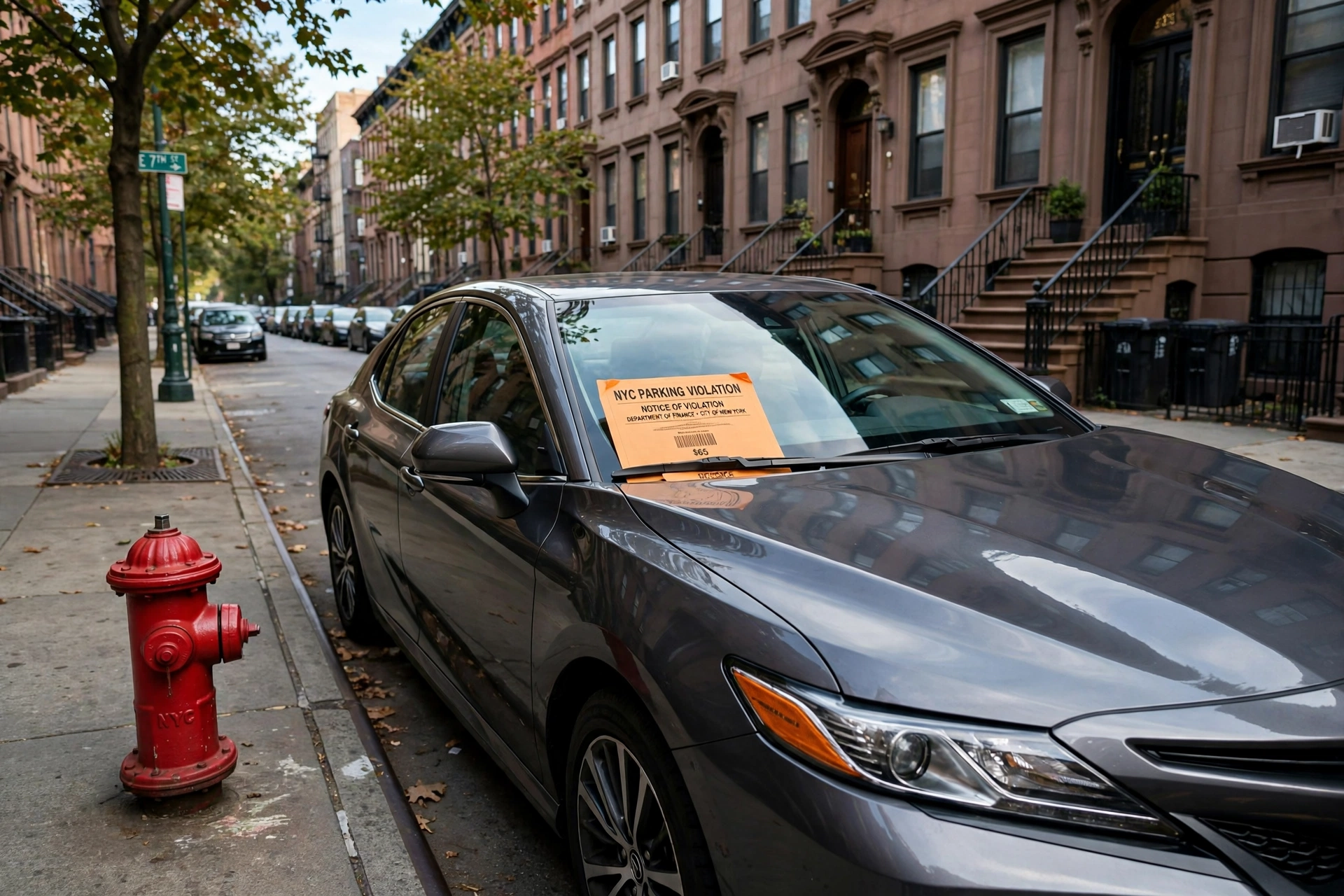
In FY2025, 10.40% of appealed code-40 tickets were dismissed — 127 of 1,221 (NYC Department of Finance Annual Report, FY2025). Published history, not a promise — but it shows where wins come from. As the code 40 guide puts it, hydrant tickets hinge on the 15-foot rule: wins show the hydrant wasn't visible, or the distance was mismeasured. Before you pay, work the defect checklist:
- Was a fire hydrant actually at that location? Tickets get written for hydrants that were removed or covered.
- Were you really within 15 feet of it? The officer's estimate is not a measurement. Near the line, distance is the whole case.
- Was the hydrant visible — not hidden or unmarked? A hydrant behind a truck, fencing, snow, or overgrowth is a different ticket than a bright red one in plain sight.
- Is your plate number correct on the ticket? A wrong plate, make, or color is a defect on its face, and Finance dismisses defective tickets.
Photograph before you move the car. This step cannot be recreated later:
- One wide shot with car and hydrant in the same frame — the distance shot.
- A shot from the hydrant toward your bumper, and one back.
- Anything blocking the view of the hydrant, from where a parking driver would see it.
- The ticket itself, and your plate.
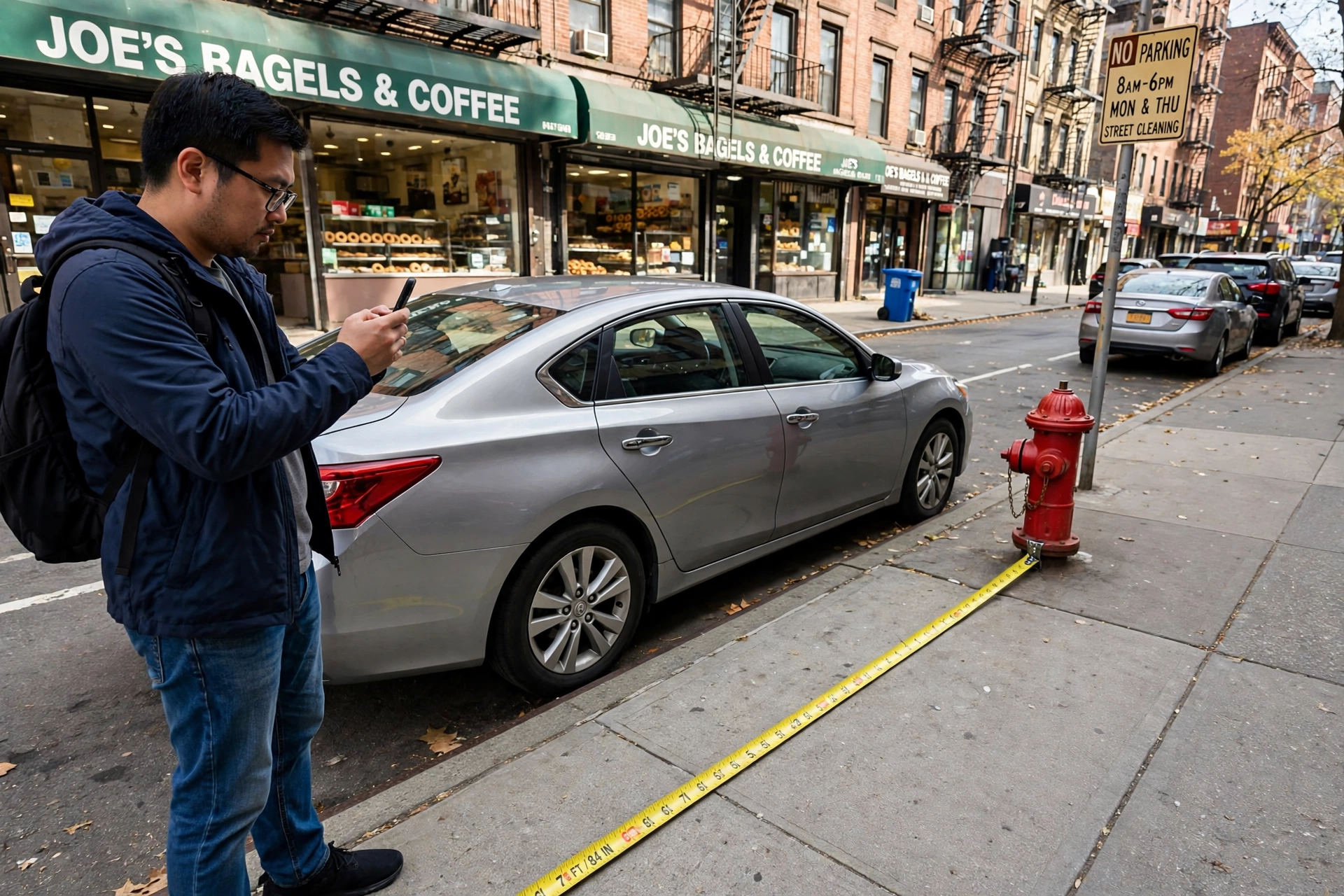
Already driven away? Go back and shoot the hydrant and curb anyway — they do not move.
Check the odds before you pay — free
TicketBeat's free odds check shows the published record for your code: snap a photo of the ticket and the code is read for you, or type 40 yourself. The check is free up to 3 free lookups a day per visitor (counted by network address and browser), no account needed; a photo is read once, then discarded. You get the 10.40% rate plus the defect checklist, item by item against your ticket.
Suspect other tickets on your plate? Run the free plate lookup — it pulls every open ticket on your plate from NYC Open Data, and the free plate watch emails you when the next one lands, in its cheap window.
A worked example
An example, names changed: a Bay Ridge driver gets a code 40 ticket on a Saturday — $115 — and swears the hydrant was well behind her. Before moving the car, she takes the wide shot: car and hydrant in one frame. Then a tape along the curb in a second photo — the hydrant sits just over 15 feet from her rear bumper.
She checks code 40 first: 10.40% of appeals dismissed in FY2025, and the checklist points straight at distance. She orders the $9.99 dispute letter, drafted around the mismeasured distance, attaches her two photos, and files through the city's dispute portal that weekend — inside the 30-day window, so no penalties pile on while she waits. A hearing officer rules in typically 30 to 60 days. Her dispute rests on a measurement she can show, not a feeling she can only describe.
What the letter costs — and what stays free
Disputing on the city's own site is free; it always was. What TicketBeat charges for is the writing. A dispute letter drafted around your ticket's details, citing the top dismissal reasons for your code and delivered on-screen, ready to print, costs $9.99, one time and takes about two minutes. You file it yourself — TicketBeat drafts, it does not submit disputes for you. If tickets keep coming, Watchdog covers letters for up to 3 plates for $6.99 a month while subscribed, cancel anytime. The odds check, plate lookup, and plate watch stay free, within the caps above.
Who this is for — and who it isn't
This is for you if you park near a hydrant — most blocks — and your ticket's distance or visibility is even slightly arguable. Fifteen feet is longer than it looks from behind the wheel, and officers estimate it too; a photo and a tape measure are cheap challenges.
This is not for you if you were plainly inside 15 feet of a visible hydrant with no defect on the ticket — then paying inside 30 days is the cheapest honest outcome. Not for tickets issued outside NYC, and not a guarantee: TicketBeat is general information and drafted paperwork, not legal advice.
Frequently asked questions
How far from a fire hydrant can you park in NYC?
At least 15 feet, on either side, at all hours, marked or not. The one exception the code 40 page notes: a licensed driver staying in the car, ready to move it.
How much is a fire hydrant ticket in NYC?
$115 everywhere in the city. Unpaid, it grows by $10 at day 30, $20 more at day 60, and $30 more at day 90 — $175 before judgment at around day 100.
What evidence helps fight a hydrant ticket?
Photos taken before you move the car: one wide frame holding both car and hydrant, shots along the curb between them, and anything that hid the hydrant. Distance and visibility are the grounds the published wins rest on.
What are my chances of beating a code 40 ticket?
The city dismissed 10.40% of appealed code-40 tickets in FY2025 — 127 of 1,221 (NYC Department of Finance). That rate covers all appeals, not yours; a mismeasured distance or a hidden hydrant is a stronger hand than average.
Does TicketBeat file the dispute for me?
No. TicketBeat shows your odds and checklist and drafts the letter; you sign and submit it through the city's portal, by mail, or in person. Decisions typically take 30 to 60 days.
Measure it before you pay it
A hydrant ticket is a measurement wearing a $115 price tag. Photograph the distance, check code 40's odds free, and — if the tape says you have a case — file while it is still $115, not $175.
Check my plate and my code 40 odds free
Related guides
- How to Dispute a Parking Ticket in NYC (Step by Step) — the full process — deadlines, defect checks, evidence, filing, and appeals.
- NYC Parking Ticket Fines and Deadlines (Full Schedule) — how fines grow at 30, 60, and 90 days, and when judgment hits.
- What Happens If You Ignore a Parking Ticket in NYC? — penalties, judgment, booting, and towing — in the order they arrive.
- How to Fight a Street Cleaning Ticket in NYC — code 21, the sign defense, and what to check before you pay.
- How to Fight an Expired Meter Ticket in NYC — code 38, the receipt defense, and the strongest published dismissal rate of the common codes.
- You Never Saw the Ticket: Check Tickets by License Plate NYC — find tickets you never saw on your plate before penalties stack.